

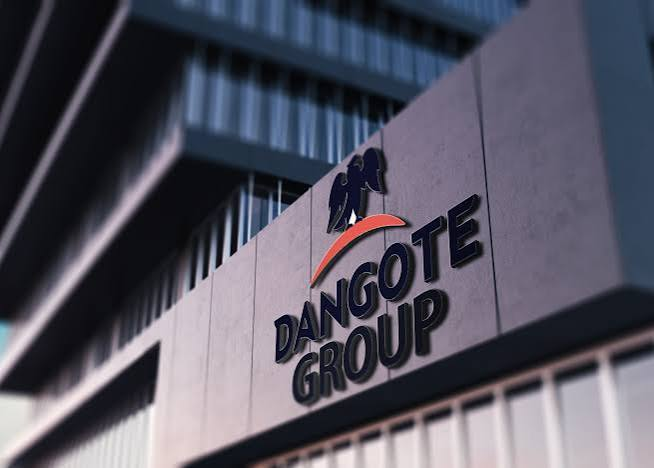
DANGOTE Group is targeting annual revenue of $100 billion by 2030 as Africa’s largest industrial conglomerate plans to deploy $45 billion in new investments across its businesses.
The group’s 2030 strategy, disclosed in its latest capital markets presentation, also targets adjusted earnings before interest, taxes, depreciation and amortisation of $30 billion as it expands its footprint in cement, refining, fertiliser, energy, infrastructure and other industrial businesses.
The investment programme represents a major expansion of the group’s industrial base, with Dangote Cement identified as one of the key growth engines because of its strong cash generation and established operations across Africa.
The cement business currently has 55 million tonnes of annual production capacity across 11 countries and sells into 25 markets. The company is targeting more than 80 million tonnes of capacity by 2030 as it seeks to capture rising demand for construction materials across the continent.
Dangote Cement generated $3.1 billion in revenue in the 12 months to June 2026, up 22 percent year-on-year, according to the September 2026 capital markets presentation.
The business recorded an adjusted EBITDA margin of 47 percent in Nigeria, cash conversion of 89 percent and return on capital employed of 68 percent over the same period.
ALSO READ: Dangote Cement grows equity, delivers robust profit but faces high impairment losses, litigations
The company said its expansion strategy would be supported largely by internally generated cash, with operating free cash flow before expansion capital expenditure reaching $1.2 billion in 2025.
Itori in Ogun State is one of the major projects under the cement expansion programme. The proposed plant has a capacity of six million tonnes per annum and represents an investment of about $800 million, with commissioning targeted for the fourth quarter of 2026.
Dangote Cement is also investing about $400 million in a 2.5-million-tonne-per-annum expansion in Ethiopia, scheduled for 2028.
Related Articles
The company said brownfield projects typically have an average payback period of about 2.5 years, while greenfield investments have an average payback period of four years.
The cement business has also strengthened its balance sheet, with net debt to EBITDA falling to 0.1 times in the first half (H1) of 2026 from 0.3 times at the end of 2025. Interest coverage stood at 8.1 times in the 12 months to June 2026, compared with five times in 2025.
Beyond cement, the wider Dangote Group’s investment plan is centred on expanding its refining, fertiliser, gas and infrastructure businesses.
The Dangote refinery is being expanded from its current 650,000 barrels-per-day capacity towards 1.4 million barrels per day, while the group is also pursuing a 12-million-tonne-per-year liquefied natural gas project and additional industrial investments across Africa.
ALSO READ: Dangote Cement shareholders approve N45 dividend, back Africa expansion strategy
The group’s strategy is increasingly built around exports and integrated industrial production, with management saying a larger share of its revenue will be generated in foreign currency.
For investors, the scale of the plan means Dangote Cement’s cash generation and balance-sheet strength are particularly important because the cement business is expected to provide both growth and financial support for the wider industrial expansion.
The strategy also shifts the group from a predominantly Nigeria-focused conglomerate towards a more geographically diversified African industrial platform, with investments spanning energy, manufacturing, logistics and construction materials.
“Africa’s $130-170bn annual infrastructure gap creates a multi-decade construction opportunity,” the company said, noting that “Africa’s largest domestic demand pools, where population growth, urbanisation and housing needs drive cement consumption.”
Related Articles