

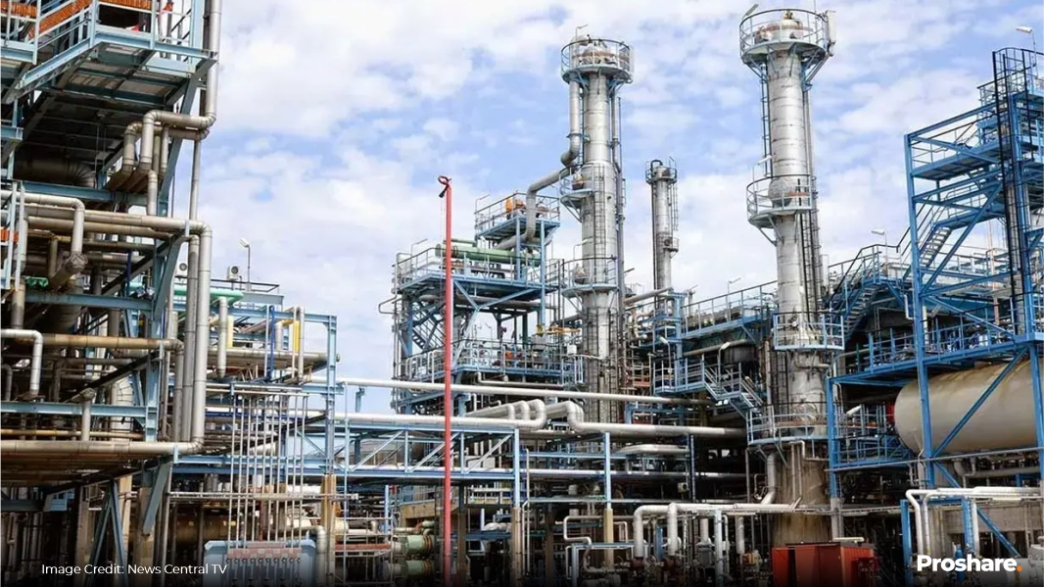
PRESIDENT Bola Tinubu has ruled out abandoning Nigeria’s three state-owned refineries, pledging a fresh rehabilitation strategy to restore the facilities to operation despite the growing dominance of private-sector refining capacity.
The president said the government was adopting a more commercially driven approach to reviving the Port Harcourt, Warri and Kaduna refineries, with technical assessments, strategic partnerships and stricter operational standards expected to determine the next phase of the rehabilitation programme.
Tinubu, represented by the Permanent Secretary of the Ministry of Petroleum Resources, Patience Oyekunle, gave the assurance on Monday at the 20th OTL Africa Downstream Energy Week in Lagos.
He said the government would not allow the country’s existing refining assets to become stranded investments, signalling its intention to retain a role for the state-owned facilities as Nigeria expands domestic petroleum production.
READ ALSO: Why NNPC’s contract-driven model sank refineries
The three refineries, operated by the Nigerian National Petroleum Company Limited (NNPCL), have remained largely non-operational despite successive rehabilitation programmes that have consumed billions of naira over the years.
Capabilities
The latest commitment comes as the NNPC management pursues a new arrangement with two Chinese companies through a memorandum of understanding aimed at revamping the facilities.
Tinubu said the government was determined to avoid repeating past approaches to refinery rehabilitation, stressing that the new strategy would place greater emphasis on commercial viability and operational sustainability.
“At the same time, the government remains committed to ensuring that existing national refining assets are not allowed to become stranded investments.
Related Articles
READ ALSO: NNPC: $3bn spent under Kyari, but Ojulari now says refineries were burning cash
“We are pursuing a more rigorous, commercially sustainable approach to the rehabilitation and repositioning of our refineries, supported by technical assessment, stronger partnerships, and improved operational discipline,” he said.
The president said Nigeria’s ambition was to move beyond exporting crude oil and importing finished petroleum products to retaining more value through domestic processing and expanding its role as a supplier to African markets.
“Our objective is clear. Nigeria must first refine more of its crudes, create more value domestically, and become a reliable supplier of energy to Africa,” he said.
His remarks come as the emergence of large-scale private refining capacity begins to reshape Nigeria’s downstream petroleum industry, particularly with the growing operations of the Dangote Petroleum Refinery.
Tinubu described the development of private refining capacity as a major shift in the country’s energy landscape, noting that the Dangote refinery had attained its nameplate capacity of 650,000 barrels per day.
READ ALSO: NNPC under Kyari spent nearly $3bn on Nigeria’s three refineries. None is working now.
According to him, the development has strengthened Nigeria’s prospects of becoming a net exporter of refined petroleum products while creating opportunities to supply other African countries.
“The emergence of large-scale private refining capacity represents an important turning point. The Dangote refinery has reached its 650,000-per-day nameplate capacity, strengthening Nigeria’s prospect of becoming a net exporter of refined petroleum products and creating opportunities for regional supply,” he said.
However, the President said the government’s energy strategy extended beyond expanding crude production and refining capacity, arguing that the country’s petroleum resources must support industrialisation, manufacturing and broader economic development.
Related Articles
For decades, Nigeria exported crude oil while relying heavily on imported petrol, diesel and other refined products to meet domestic demand. Tinubu said his administration intended to reverse that structure by promoting domestic refining, petrochemicals, gas processing and other energy-intensive industries.
He said the objective was to ensure that oil and gas investments generated employment, technology transfer, industrial capacity and wider economic benefits rather than merely increasing hydrocarbon production.
READ ALSO: Port Harcourt, Warri, Kaduna refineries owe NNPC N4.5trn without producing oil
“Our commitment is therefore not to simply produce hydrocarbons. It is to create an ecosystem in which hydrocarbons catalyse industrialisation, jobs, investment, technology, and prosperity,” he said.
The President also challenged operators across the petroleum value chain to increase investment in local capacity, technology, infrastructure and workforce development.
He said companies operating in the sector would be expected to demonstrate greater commitment to environmental protection and the welfare of host communities, warning that the era of extracting resources without building sustainable economic value was changing.
“To our industry stakeholders, I say, the era of extracting value without building value is changing. We expect greater investment in local content, technology, infrastructure, human capital, environmental responsibilities, and boost community development,” he said.
Tinubu urged investors to take advantage of opportunities in Nigeria’s oil and gas industry, assuring them that the country remained open to businesses with the technical expertise and financial resources required to develop its energy assets.
Earlier, the Chairman of the OTL Advisory Board, Adetunji Oyebanji, said Africa’s downstream petroleum industry had undergone considerable changes since the organisation began in 2007.
He identified improvements in refining, logistics and market liberalisation as important developments in the continent’s efforts to strengthen its energy supply capacity.
Related Articles
Oyebanji also said the emergence of large-scale private refining in Nigeria, particularly the Dangote refinery, had altered the outlook for domestic petroleum supply and regional fuel trade.