

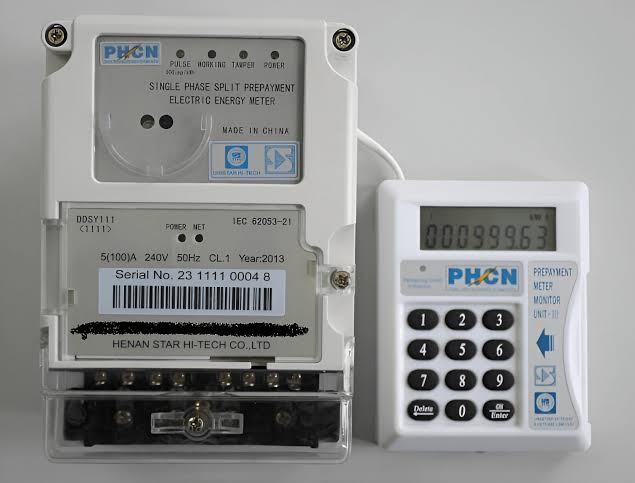
NEARLY 4.7 million electricity customers across Nigeria were still without meters at the end of August 2026, even as the country’s metering coverage climbed to 63.10 per cent, figures from the Nigerian Electricity Regulatory Commission (NERC) have shown.
Electricity distribution companies installed 141,746 meters in August, taking the total number of metered customers to 8.05 million from 7.90 million in July. However, the monthly installation rate slowed, with the number of new meters falling by 11.4 percent from 159,980 recorded in the previous month.
NERC’s latest metering factsheet, released on Wednesday, showed that the number of active electricity customers increased to 12.75 million in August from 12.67 million in July. Metering coverage consequently improved from 62.37 percent to 63.10 percent.
Despite the progress, more than one in every three active customers remained without a meter, leaving millions of households and businesses exposed to billing arrangements that may be based on estimated consumption.
The figures underline the uneven pace of metering across Nigeria’s electricity distribution network, with some operators recording coverage above 80 percent while others have yet to meter half of their customers.
READ ALSO: DisCos collect N191.86bn from N240.71bn June electricity bills
Eko, Ikeja lead metering performance
Eko Electricity Distribution Company recorded the highest metering coverage among the country’s 11 distribution companies, with 89.64 percent of its active customers equipped with meters.
Ikeja followed with a metering rate of 87.74 percent, while Abuja recorded 82.62 percent. Port Harcourt became the fourth distribution company to cross the 70 percent mark, achieving coverage of 71 percent in August.
Benin’s metering rate stood at 64.41 percent, while Ibadan recorded 59.23 percent and Enugu 52.40 percent.
The figures show that progress remains uneven across distribution territories, with the strongest performers approaching or exceeding nine-tenths of their customer base while several operators continue to lag behind.
Four distribution companies recorded metering rates below 50 percent, a level NERC classifies as poor performance. Kano posted a rate of 42.84 percent, Kaduna recorded 42.32 percent, Yola achieved 39.15 percent and Jos had the lowest coverage at 37.60 percent.
In Jos, only 312,253 of 830,504 active customers had meters. Yola had metered 201,303 of its 514,122 customers, while Kaduna recorded 236,844 metered customers out of 559,658 active accounts.
READ ALSO: FG scraps $717.7m World Bank power facility amid deepening electricity sector crisis
Large customer bases pose additional challenges
Ibadan had the largest customer base among the distribution companies, with 2.57 million active customers. Of this number, approximately 1.52 million had meters, leaving a substantial number still awaiting installation.
Abuja had 1.43 million active customers, including 1.18 million metered customers. Eko, despite leading the sector in coverage, had a smaller customer base, with 618,880 of its 690,408 active customers metered.
NERC groups distribution companies into three categories according to their metering performance. Operators with coverage below 50 percent fall into the red category, those between 50 and 69 percent are classified as amber, while companies with rates of 70 percent or higher are placed in the green category.
The classification highlights the gap between distribution companies that have made substantial progress and those still struggling to extend meter access to their customers.
READ ALSO: Power generation drops 11% to 2,898MW as gas shortages deepen Nigeria’s electricity crisis
NERC outlines customer rights
Alongside the metering statistics, the regulator reiterated protections for electricity customers covering meter installation, estimated billing, disconnection, faulty equipment and dispute resolution.
Under the Meter Asset Provider scheme, customers who pay the full cost of a meter upfront are entitled to installation within 10 days of payment.
Customers who acquire meters through the scheme are also entitled to reimbursement through energy credits. According to NERC, the credits are generated automatically each month and spread over 120 months.
Meters supplied through the Meter Acquisition Fund and the World Bank-backed Distribution Sector Recovery Programme are provided to customers at no cost, the regulator said.
For faulty meters, distribution companies are required to repair or replace the equipment within 48 hours after a customer reports the problem.
The provisions are intended to clarify customers’ rights and the obligations of distribution companies as the sector continues efforts to expand metering, improve billing transparency and strengthen revenue collection.