



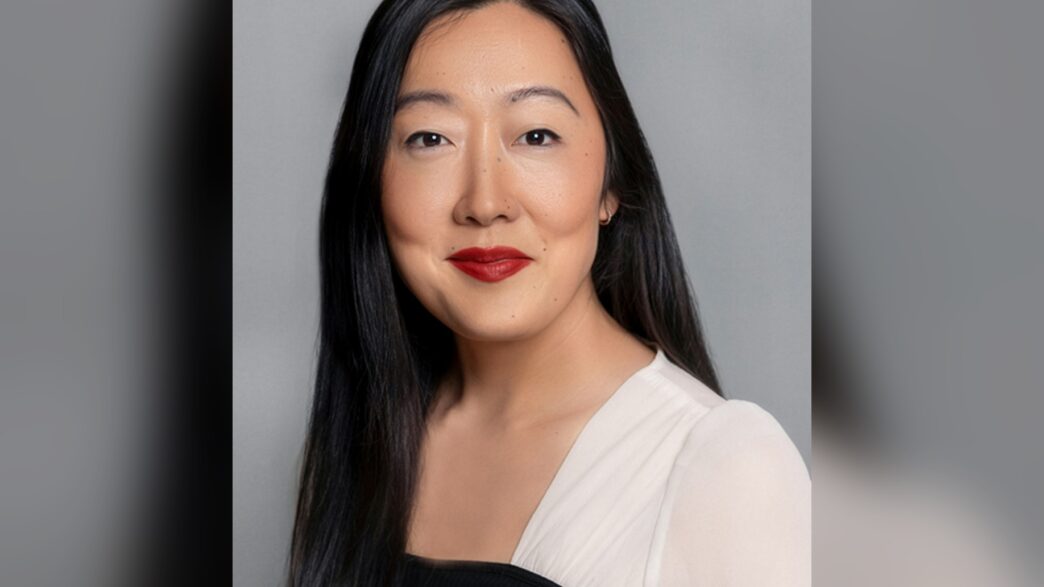
There are founders who are larger than their companies, and then there is Jeremy Johnson. For a decade he was not merely the chief executive of Andela. He was its face, its founding myth made flesh: the young American who had already co-founded 2U, taken it to a Nasdaq listing in March 2014, and then, that same year, helped start a company in a borrowed duplex at 33c Cameron Road, Ikoyi, Lagos, on the wager that African engineering talent could serve the world. There were six co-founders, drawn from Nigeria, the United States, Canada and Cameroon, and a fellowship that would grow into a unicorn.
So it is worth pausing on a fact that the record states plainly and the public absorbed barely at all. Jeremy Johnson is no longer the chief executive of Andela. He has not been for two years.
The announcement that wasn’t news
On 22 August 2024, Andela announced through its own newsroom that Carrol Chang would become Chief Executive Officer and join the Board of Directors, effective 17 September 2024. Johnson would step down as chief executive and remain on the board, which is chaired by Julia Gillard, the former Prime Minister of Australia. The announcement was public. It was carried, briefly, and then it sank beneath the churn of funding news and product launches, the way announcements do.
To be precise: the world did not literally miss it. The release was published; the headlines existed. What the world missed was the meaning. A founder handover at a billion dollar African technology company is, by any measure, a changing of the guard, and this one arrived with a successor whose record reads like a syllabus for running labour at planetary scale. At Uber, Chang was Global Head of Driver & Courier Operations, tapped after Covid to rebuild the driver base, one of the company’s top priorities. The marketplace of flexible workers she grew reached nearly 7 million people in over 70 countries, powering some $130 billion of ridesharing and delivery business. Before Uber she worked at McKinsey & Company and at the US Department of Homeland Security, and her career includes work in the administration of President Barack Obama. She holds a BA from Harvard and a JD and MBA from Northwestern, and she lives in Washington, D.C., with her husband and three children.
Read that appointment slowly and it stops looking like routine succession. By 2024 Andela had completed its long metamorphosis. The fellowship that trained junior developers on physical campuses in Lagos, Nairobi, Kampala, Kigali, Accra and Cairo had been dismantled in the brutal pivots of 2019 and 2020, when 420 junior developers were let go in a single restructuring and 135 more staff followed months later, the campuses closed, the company remote-first. In March 2023 it bought Qualified, the technical skills assessment platform, and with it the Codewars community of more than 3.6 million engineers. The company Johnson founded to train African juniors had become something else entirely: a vast, borderless labour exchange. The board handed it to the woman who had run the largest flexible workforce operation on earth.
There is no allegation in any of this. A board may change its chief executive for a hundred lawful reasons, and Delaware law, under which Andela Inc. is organised, asks of directors only that such decisions be made loyally, carefully and in the company’s interest. No filing seen by SecretsReporters suggests otherwise. But context is not accusation, and the context here is loud.
The season of the handover
Consider the season in which that announcement landed, because the storms around Andela were not all in the future. Some were already on file.
The war with Toptal, Andela’s rival in the market for freelance engineering talent, began in June 2021, when Toptal sued Andela and a group of its employees in the Supreme Court of the State of New York. Toptal alleged, in its complaint, that Andela had built a near clone of its business by poaching key staff and inducing them to break confidentiality, non-solicitation and non-compete agreements, and that its trade secrets and client relationships had been misappropriated in the process. Andela called the complaint wholly without merit. That first filing was news in its day. What drew no attention was the escalation. On 24 May 2024, three months before the handover was announced, the case was removed into the United States District Court for the Southern District of New York, where it proceeds under the Defend Trade Secrets Act as case number 1:24-cv-04027, against Andela and Courtney Machi, a former Toptal executive who had joined its rival. It is still live, and its discovery timetable now runs deep into 2026.
The second storm had reached no courtroom by the month of the announcement, but on the account later filed by the man at its centre, it was already two years old inside the company. Dr. Bruce Tizes is a physician, a law graduate and a former hedge fund manager who worked beside Johnson in 2014 as Andela’s first chief strategist, invested in its seed round, and rejoined the company in June 2021 as Vice President Strategy, stepping in as interim Chief Financial Officer that December. In an amended complaint filed in the Southern District of New York, Tizes alleges that as interim CFO he found a finance department in disarray and concluded that Andela was recording the full amounts billed to clients as its own revenue, treating itself as a principal when, on his account, it substantially functioned as an intermediary. That choice, he alleges, inflated reported revenue to more than three times what it should have been, and fed the 2020 financial statements, the 2021 409A valuations and the projections placed before the Series E investors. He alleges that he pressed Johnson and the board to correct the record and was refused; that on 6 February 2023 he reported the company to the US Securities and Exchange Commission; that he told Johnson of the report four days later; and that he was then frozen out of meetings and decision-making and dismissed on 13 July 2023. Andela disputes his account and has described the theory behind his claims as legally untenable and demonstrably untrue.
On 14 October 2025, Tizes sued. The action, Tizes v. Andela Inc., case number 1:25-cv-08481, claims unlawful retaliation under the whistleblower protection provision of the Dodd-Frank Act and under section 740 of the New York Labor Law. Those are allegations in a pleading, tested against nothing yet, and SecretsReporters asserts none of them as fact. What is fact is the procedural record. Andela moved to dismiss the case and to strike parts of it, and on 30 September 2026 Judge Ronnie Abrams refused both requests, letting the claims proceed. A suit that reaches back into the numbers on which the Series E was sold has passed, until now, without press coverage.
None of this proves the board knew what was coming. It proves only that the weather was already in the record when the captain changed: a rival’s trade secrets case freshly landed in federal court, and a former interim finance chief who had told the securities regulator, in a report filed the year before, that the company’s numbers could not be trusted. Whether the timing of the handover was foresight or coincidence is a question the board’s minutes could answer and the public record cannot.
The frozen number
And then there is the number everyone still quotes. Andela is called a $1.5 billion company, a unicorn, on the strength of a single transaction: the $200 million Series E of September 2021, led by SoftBank Vision Fund 2, with new investor Whale Rock alongside existing backers Generation Investment Management, the Chan Zuckerberg Initiative and Spark Capital. It was a real mark, struck on a real priced round, and it took the company’s total disclosed funding to roughly $381 million across its life.
But no priced round has followed it. Five years on, the figure is a photograph, not a mirror: a valuation from a different interest rate era, a different venture market, a different company. Searches of SoftBank’s public disclosures for a current carrying value for the Andela stake, a restated ownership percentage, or any impairment recorded against it since the round closed return no Andela-specific figure. That is a gap in the record, not a finding. It means only that the number the world repeats has not been re-measured in public since the month the money arrived.
So here is the joined-up picture, assembled for the first time from the public record: a founder who built an African legend and handed it over in an announcement the world read for a day; a successor built for scale; a trade secrets war that began as a state court suit and moved into federal court three months before that announcement; a whistleblower suit whose central allegations reach back to the numbers behind the company’s defining fundraise, filed by a finance chief the company had dismissed more than two years earlier, and now kept alive by a federal judge; and a valuation frozen in the month the SoftBank money arrived. Each fact was public. Nobody had put them in the same room.
Johnson remains on the board of the company he built. But the chief executive’s seat changed hands two years ago, in an announcement that sank within the week. In the life of a unicorn, there are few moments that matter more than the day its founder stops being its chief executive. Who really runs Andela now, and what did the board already know, in August 2024, about the storms its new captain would be asked to sail through?
Follow Secrets Reporters on WhatsApp: join the channel for every exclusive the moment it publishes.

