

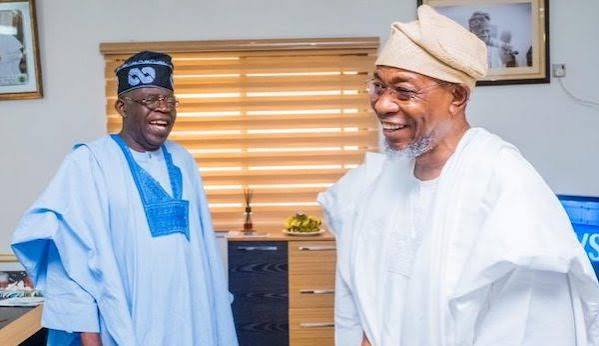
NATIONAL Secretary of the African Democratic Congress (ADC), Mr Rauf Aregbesola, has launched a pointed attack on President Bola Tinubu’s ‘Emi lokan’ slogan, arguing that the phrase reflects a political philosophy centred on personal entitlement to power.
Aregbesola, a former ally of Tinubu and former minister of interior, said Nigerians would have the opportunity in 2027 to resist what he described as an ‘assault on democracy.’
He made the remarks in a video posted on his X account on Tuesday, revisiting the expression that became one of the defining phrases of Tinubu’s 2023 presidential campaign.
‘Emi lokan,’ a Yoruba expression meaning “it is my turn,” was used by Tinubu during a campaign rally in Abeokuta, Ogun State, as he made the case for his presidential ambition.
But Aregbesola said the phrase should be understood in a much more serious political context. “
“Despotism is a single word for ‘Emi lokan,” he said.
The former Osun governor argued that the expression conveyed the idea of an individual claiming a special right to determine who should exercise political power.
READ ALSO: Court fixes April 13 to rule on suit seeking removal of Mark, Aregbesola as ADC leaders
“Despot. A man who believes that he has a divine right to administer space and time,” Aregbesola said.
‘That’s ‘Emi lokan,’ not ‘awa lokan,’ not ‘egbe lokan,’ not ‘eeyan lokan’”
He placed particular emphasis on the use of ’emi’, meaning ‘I’ or ‘me’, arguing that it represented an assertion of individual authority rather than a collective political aspiration.
Related Articles
According to Aregbesola, Nigerians may have initially viewed the slogan as campaign rhetoric, but subsequent events have given the phrase a different significance.
“If that was not well understood then, I want to believe that Nigerians now know what it really means,” he said.
He added that what he regarded as the philosophy behind the slogan was no longer merely being expressed verbally but was now being demonstrated through political actions.
Aregbesola then turned his attention to the 2027 election, saying Nigerians could use the electoral process to stop what he called an attack on democratic values.
“But Nigerians have the opportunity today to prevent the assault on democracy,” he said.
From political allies to opposition figures
Aregbesola’s comments carry added political weight because of his long association with Tinubu.
Both men were influential figures in the political structure that emerged in Lagos and later expanded nationally through the Alliance for Democracy and its successor formations.
READ ALSO: Court affirms legitimacy of David Mark-led ADC leadership
Aregbesola went on to serve as Osun governor and later became interior minister under former President Muhammadu Buhari.
Their political relationship, however, has since deteriorated, with Aregbesola eventually leaving the All Progressives Congress (APC and joining the ADC.
Related Articles
His current position as national secretary places him at the centre of an opposition movement preparing for the 2027 presidential election.
The ADC is seeking to consolidate opposition forces around Atiku Abubakar, its presidential candidate, as the party attempts to challenge the governing political establishment.
Aregbesola’s own position within that campaign structure has nevertheless generated questions.
He was not included in the campaign council list released in September, despite his senior position in the party and his experience in grassroots mobilisation.
The omission prompted speculation about internal disagreements within the opposition party.
ADC National Publicity Secretary, Bolaji Abdullahi, dismissed the absence of some party leaders from the campaign council as evidence of estrangement, saying the party’s wider leadership structure remained functional.
However, the reported disagreements over the composition of the campaign council underscore the organisational challenges confronting the opposition as it prepares for the 2027 contest.
Aregbesola’s latest remarks nonetheless place the former Tinubu ally firmly within the political argument over what the next election should represent — not simply a contest for power, but, in his framing, a choice over the limits of political authority and the direction of Nigeria’s democracy.