

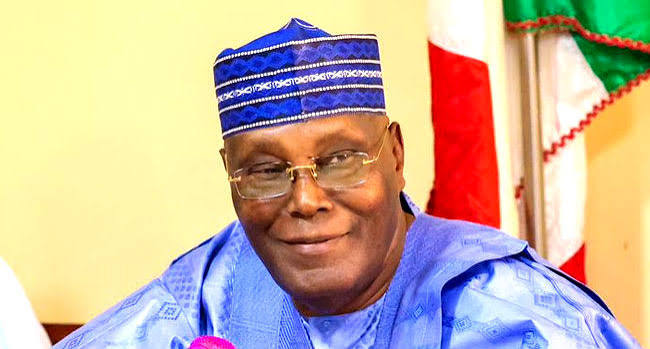
FORMER Vice-President, Alhaji Atiku Abubakar, has raised concerns over Nigeria’s rising public debt, saying the country’s latest debt stock translates to an estimated N716,822 for every Nigerian.
Atiku’s comment followed the release of new figures showing that Nigeria’s total public debt reached N166.79 trillion at the end of June 2026.
The former vice-president, who is the African Democratic Congress (ADC) presidential candidate, also criticised the Federal Government’s reported move to secure another $1.5 billion in financing from the World Bank.
He spoke through his spokesperson, Phrank Shaibu, in a statement issued on Monday. According to Atiku, the increase in the country’s debt burden had become difficult to reconcile with the economic pressures confronting households across the country.
“If Nigeria’s public debt were divided among everyone, each person’s share would be N716,822 today. Three years ago, it was N383,442. That is an 87 per cent increase,” he said.
READ ALSO: Nigeria’s public debt rises N7.44trn to N166.79trn in Q2
Atiku argued that the rising debt burden was coming at a time when Nigerians were already contending with higher costs of food, transportation, fuel and electricity.
“Tinubu has made today difficult and tomorrow more uncertain,” he added.
Debt rises by N7.44tn in three months
Data from the Debt Management Office (DMO) showed that Nigeria’s total public debt increased from N159.35 trillion at the end of March 2026 to N166.79 trillion by June.
The N7.44 trillion increase represents a 4.67 percent rise within the three-month period.
Related Articles
The June figure also exceeded the N152.40 trillion recorded at the end of June 2025, putting the year-on-year increase at N14.39 trillion.
The latest debt position covers obligations of the Federal Government, the 36 states and the Federal Capital Territory (FCT).
Fresh World Bank borrowing under scrutiny
Atiku’s criticism comes against the backdrop of plans by the Federal Government to seek fresh financing from the World Bank.
Reports indicate that Nigeria is pursuing three proposed facilities worth $500 million each, bringing the potential package to $1.5 billion.
The proposed financing is expected to support programmes covering climate resilience, social protection and early childhood development.
READ ALSO: Oyedele to Senate: Naira devaluation drove debt figures, not fresh borrowing
One of the facilities is linked to the Agro-Climatic Resilience in Semi-Arid Landscapes project, known as ACReSAL, while the other proposed financing packages are targeted at social protection and early childhood development initiatives.
The proposed loans are separate from the N166.79 trillion debt figure reported for June and would only affect the country’s debt stock if approved, borrowed and subsequently disbursed.
Atiku questions continued borrowing
Atiku said the government should first provide Nigerians with a detailed account of how existing loans had been spent before taking on additional obligations.
He questioned the rationale for further borrowing at a time when the administration has maintained that reforms have strengthened government revenue and improved the country’s fiscal position.
Related Articles
The ADC candidate also called for greater transparency around the proposed World Bank facilities, including details of the projects to be financed, the beneficiaries and the expected outcomes.
He argued that Nigerians should be able to track the use of borrowed funds and determine whether the projects ultimately deliver measurable benefits.
What the latest figures mean
Atiku’s N716,822 figure is an illustrative calculation obtained by dividing the aggregate public debt by the country’s population.
Nevertheless, the calculation highlights the scale of the government’s overall borrowing obligations and the debate over how those obligations should be managed.
The latest development has renewed attention on Nigeria’s borrowing strategy, particularly as the government considers additional development financing from multilateral institutions.
The Federal Government’s proposed $1.5 billion World Bank financing, meanwhile, remains subject to the relevant approval and financing processes.