


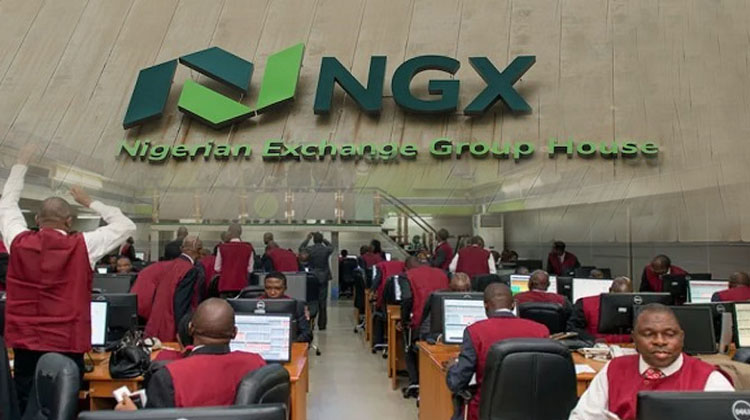
GOVERNMENT-ISSUED debt instruments accounted for N11.08 trillion of securities listed on the Nigerian Exchange (NGX) between January and September 2026, dwarfing the value recorded for corporate and other non-government instruments.
The amount represented approximately 80 percent of the N13.86 trillion in identifiable listing value recorded during the first nine months of the year, according to Schedule 10 of the Nigerian Exchange Regulation’s X-Compliance Report dated October 2, 2026.
Federal Government of Nigeria (FGN) securities contributed the largest share, with a listing value of about N10.535 trillion. The figure rose to approximately N10.835 trillion when a N300 billion sukuk issued through FGN Roads Sukuk Company 1 Plc was included.
Lagos State Government bonds contributed a further N244.82 billion, bringing the value of the three categories of government-related instruments to about N11.08 trillion.
Corporate debt, rights issues, public offers, private placements and other non-government transactions accounted for the remaining N2.78 trillion.
The figures cover both newly listed securities and supplementary listings, including additional amounts admitted under existing bond programmes. They therefore reflect the value of securities listed during the period rather than the amount of fresh cash raised exclusively through new issues.
READ ALSO: DMO auctions N600bn reopened bonds as yields rise to 22.60%
Existing FGN bonds feature prominently
A significant portion of the government-related listing value came from additions to established Federal Government bond instruments.
The 15.45 percent FGN June 2038 bond appeared repeatedly in the report, with separate listings valued at N710.01 billion, N1.373 trillion and N354.63 billion.
Other substantial additions included N1.37 trillion in the 17.95 percent FGN June 2032 bond, N888.63 billion in the 16.79 percent FGN September 2036 bond and N817.07 billion in the 19 percent FGN February 2034 bond.
The 22.60 percent FGN January 2035 and 16.2499 percent FGN April 2037 bonds were also among the instruments recorded in the report.
Repeated additions to these securities reflect the government’s continued use of existing bond lines to access the domestic debt market. Reopening an existing bond allows the government to issue more of an already established instrument rather than introduce an entirely new bond.
Government borrowing supports fixed-income activity
The concentration of government instruments on the Exchange coincides with sizeable allotments recorded at recent domestic bond auctions conducted by the Debt Management Office (DMO).
At its August 2026 auction, the DMO allotted N1.56 trillion across three FGN bonds after receiving investor subscriptions of N1.73 trillion. The January 2035, April 2037 and June 2038 bonds featured in the auction.
In July, the agency allotted N929.32 billion across three bonds following bids worth N1.74 trillion. The same instruments were featured in that auction.
The repeated use of the bonds in government auctions and supplementary listings underscores their importance to the Federal Government’s domestic financing programme.
The listing figures, however, should not be treated as a direct measure of total government borrowing or investor demand. Listing values can include securities issued earlier, additional amounts admitted to trading and instruments already traded in the market.
READ ALSO: Nigeria’s Eurobonds slide as Middle East crisis rattles global markets
Lagos State contributes N244.82bn
Lagos State’s bonds accounted for approximately N244.82 billion of the government-related listing value.
The total comprised a N230 billion Series 4 10-year bond carrying a 16.25 percent coupon and a N14.815 billion Series 3 five-year green bond with a 16 percent coupon.
The state’s securities were listed under its debt and hybrid instrument issuance programme, adding a subnational component to the government securities recorded during the period.
The N300 billion sukuk issued through FGN Roads Sukuk Company 1 Plc also contributed to the total. The seven-year Ijarah instrument carries a 19.75 percent return.
Fiscal deficit keeps attention on debt market
The dominance of government securities comes as Nigeria faces substantial budget financing requirements.
The Federal Government’s 2026 borrowing plan was raised to N29.20 trillion after the projected fiscal deficit widened to N31.46 trillion, according to previously reported fiscal plans. The 2026 budget had initially been presented with a deficit of N23.85 trillion.
Domestic debt instruments provide a channel for the government to obtain financing from investors, including banks, pension funds and other institutional participants.
However, heavy government issuance can also have implications for the wider financial market, including competition for investors’ funds and the returns available on alternative investments. The eventual effect depends on issuance volumes, market liquidity, interest rates and investor demand.
The NGX figures show that government-related securities dominated identifiable listing activity in the first nine months of 2026, while corporate and other non-government instruments accounted for a comparatively smaller share.