

THE Federal Government is targeting another 500 Compressed Natural Gas refuelling facilities nationwide as it accelerates efforts to expand cheaper transportation fuel alternatives, with private investors committing about $2.6 billion to the sector.
The government said Nigeria currently has approximately 160 operational CNG stations, while another 170 facilities are undergoing development or regulatory approval.
Executive Chairman and Chief Executive Officer of the Presidential Initiative on Compressed Natural Gas and Electric Vehicles, Ismaeel Ahmed, disclosed this on Friday during the commissioning of a CNG refuelling and vehicle conversion facility at the State House in Karu, Abuja.
The facility was developed through a partnership involving the State House, Pi-CNG/EV and Rolling Energy.
Ahmed said the Federal Government had directed another round of infrastructure expansion through the MDGIF, with about 500 additional facilities expected to boost nationwide access to CNG.
He said the country had moved beyond testing the viability of the alternative fuel, with the next challenge being to accelerate infrastructure deployment to meet demand.
“This is not a proof of concept any longer. It’s not the beginning. It’s a scale thing. Nigeria is 220 million people strong, 12 million vehicles. We are moving at a scale that we need to move,” he said.
READ ALSO: Tinubu pivots to shaky electric vehicle plan as CNG policy falters
Ahmed called on more entrepreneurs to invest in the sector, noting that private businesses would play a central role in expanding the refuelling network.
He said Nigeria took about 60 years to develop 24,000 petrol stations, which were largely privately owned, adding that CNG infrastructure would similarly require substantial private sector participation.
Related Articles
The Pi-CNG chairman said the expansion was necessary to make alternative fuel accessible to commercial motorists across the country.
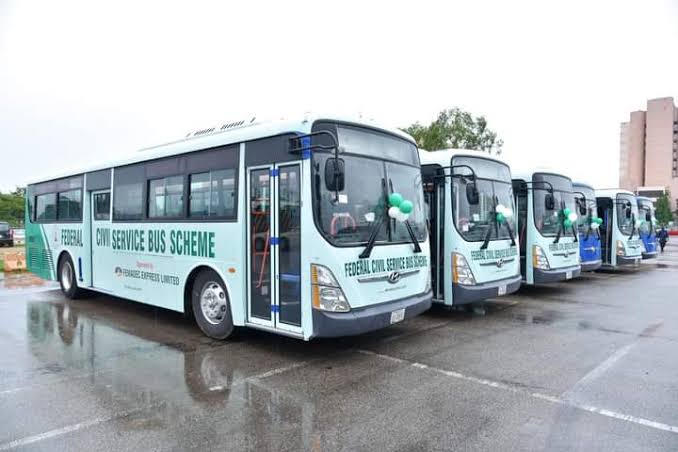
CNG buses cut fares by up to 40%
Ahmed said CNG-powered buses had reduced transportation fares by between 30 per cent and 40 per cent on routes where they operate, including parts of Abuja, Lagos and Kano.
He cited the Kano-Katsina route, where passengers previously paid between N3,000 and N4,000 but could costs about N1,500 on CNG-powered buses.
He said the government intended to extend the benefits to more commercial transport corridors nationwide.
The initiative follows the removal of petrol subsidy in 2023, which significantly increased transportation costs and strengthened the case for cheaper fuel alternatives.
Nigeria has substantial natural gas reserves, although much of the resource remains underutilised.
READ ALSO: Tinubu pivots to shaky electric vehicle plan as CNG policy falters
State House converts abandoned petrol station
The Permanent Secretary, State House, Temitope Peter Fashedemi, said the newly commissioned facility was established by converting an abandoned petrol station into a CNG refuelling and vehicle conversion centre.
He said the State House provided the existing infrastructure, while Rolling Energy financed its rehabilitation and installation of equipment without government expenditure.
According to Fashedemi, the project demonstrates how government institutions can support the programme by making existing facilities available for private investment.
He said the facility had dispensed free CNG to motorists in surrounding communities during its trial period before formal commissioning.
Fashedemi added that some recently acquired State House vehicles were already hybrid models capable of using CNG, while plans were underway to encourage staff members to convert eligible vehicles.
He urged private investors to take advantage of the opportunities created by the Federal Government’s alternative fuel programme.
READ ALSO: Tinubu: More Nigerians to get cheaper transport fares from October 1
Rolling Energy targets 15 stations nationwide
The Chief Executive Officer of Rolling Energy, Mubarak Danbatta, said the facility was designed to integrate gas compression and dispensing equipment into a single system.
The station features a double-nozzle dispenser that allows vehicles to refuel from either side. According to Danbatta, the facility can refuel approximately 150 vehicles daily, depending on cylinder capacity and gas pressure.
Its vehicle conversion centre is expected to handle about 12 vehicles daily, with two conversion pits installed at the facility.
He said the company currently operates facilities in Abuja and Ilorin, with two additional stations expected to be commissioned in Kano and another two in Kaduna.
Rolling Energy is targeting nearly 15 facilities nationwide by the end of 2026. Danbatta said the State House project was the company’s second collaboration with the Presidential CNG initiative, adding that further partnerships were being planned.
The expansion of CNG infrastructure is expected to depend on private investment, reliable gas supply, affordable vehicle conversion kits and the availability of refuelling stations across major transport corridors.