

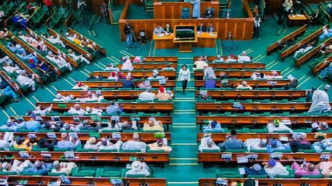
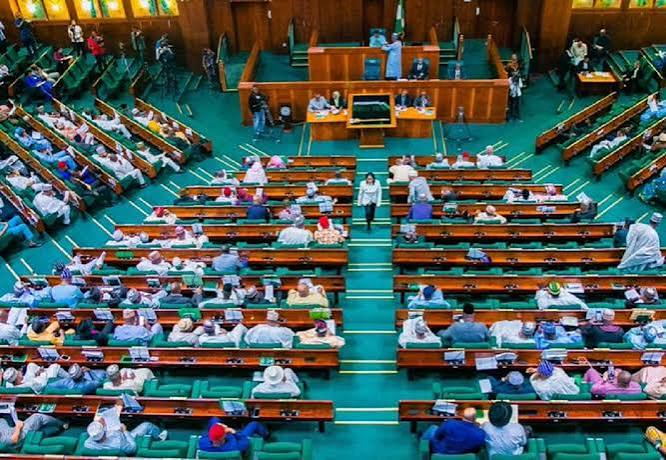
THE House of Representatives has threatened to issue arrest warrants against telecommunications executives who fail to appear before its investigative committee to answer questions about persistent network failures across Nigeria.
The lawmakers have directed the chief executives of MTN Nigeria, Airtel Nigeria, Globacom, Mafab Communications and other licensed operators to appear in person on November 4, 2026, after rejecting a request by their industry association to represent them at the hearing.
The committee, chaired by Olumide Osoba, said the companies’ top executives must personally explain recurring complaints about dropped calls, unreliable internet connections, failed airtime and data purchases, and inadequate coverage in several communities.
The dispute arose after the Association of Licensed Telecommunications Operators of Nigeria sought to appear through its chairman, Gbenga Adebayo, instead of the individual companies’ leadership.
Lawmakers rejected the arrangement, insisting that each operator held a separate licence and must account for its own performance and compliance with regulatory requirements.
READ ALSO: NCC reviews MVNO business rules as telecom regulator issues 46 licences
Moving a motion on the matter, Sunday Umeha accused the association of treating the committee’s invitation as optional rather than a statutory obligation.
He cited Section 88 of the 1999 Constitution, as amended, arguing that the National Assembly had the authority to investigate matters within its legislative responsibilities and compel attendance where necessary.
Umeha also questioned a letter reportedly sent by ALTON challenging the committee’s authority to summon the telecommunications executives.
According to him, the committee had considered seeking the executives’ arrest at its previous sitting but opted to give them another opportunity to comply.
Related Articles
He said the companies had failed to honour the invitation despite further communication through the Nigerian Communications Commission, which confirmed that the invitations had been sent directly to the chief executives.
READ ALSO: VAT collections rise to N2.42trn in Q1 as manufacturing, telecoms drive growth
Supporting the motion, House spokesman Akin Rotimi said subscribers dealt with individual telecommunications providers and should be able to hold each company accountable for poor service.
Rotimi highlighted the security implications of inadequate network coverage in parts of his constituency in Ekiti State, including communities and roads where mobile signals are unavailable.
He alleged that two traditional rulers in the constituency were killed in an ambush along a road where there was no mobile network coverage for about 20 minutes.
The lawmaker argued that such gaps could prevent residents and travellers from contacting security agencies or requesting emergency assistance during dangerous situations.
He also accused operators of prioritising commercially attractive locations at the expense of rural communities and other underserved areas.
READ ALSO: Nigeria’s GDP growth rises to 3.89% as agric, telecoms drive economic expansion
The committee raised further questions about a reported N8.46bn fine imposed on Globacom, asking whether ALTON’s chairman could adequately address the regulatory and operational issues of an individual operator while representing the industry as a whole.
Following deliberations, the committee adopted Umeha’s motion through a voice vote and adjourned proceedings until November 4, when the operators are expected to appear.
Millions of subscribers affected by service failures
The legislative action comes despite regulatory efforts to improve service quality and compensate subscribers affected by network problems.
The Nigerian Communications Commission (NCC) disclosed on October 20 that telecommunications companies had compensated 75 million subscribers for poor service in 2026 under its consumer compensation framework.
Nearly 3 million additional subscribers had reportedly received refunds for failed airtime and data transactions.
The regulator also reported more than 6,500 network interventions during the year, including equipment upgrades and capacity expansion in areas experiencing increased demand.
However, complaints about unreliable connections, billing disputes, rapid data depletion and failed transactions have persisted.
Figures attributed to the NCC for the first half of 2026 showed that the four major operators recorded 413,587 consumer complaints, with 406,938 reportedly resolved.
Airtel accounted for 228,992 complaints, followed by MTN with 124,405, Globacom with 56,810 and T2mobile with 3,885.
However, the individual figures add up to 414,092, exceeding the reported industry total by 505 complaints, a discrepancy that requires clarification.
The figures highlight the scale of customer dissatisfaction and the pressure on regulators and operators to deliver more reliable services.
Poor connectivity has implications beyond voice calls and internet browsing. Businesses depend on stable networks for electronic payments, digital transactions and communication, while households increasingly rely on mobile services to access information and essential services.
In communities with weak or absent signals, network failures can also limit access to emergency assistance and security agencies.
The lawmakers are seeking explanations from the operators’ leadership on the causes of recurring service disruptions, their compliance with regulatory obligations and the investments required to improve coverage.