


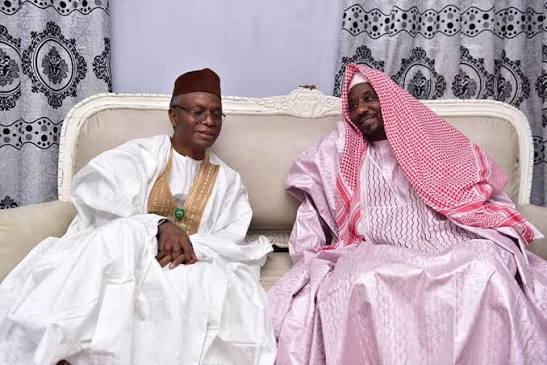
THE Emir of Kano, Muhammadu Sanusi II, has questioned the consistency of Nigeria’s anti-corruption campaign, citing the prolonged legal proceedings involving former Kaduna State Governor, Nasir El-Rufai.
Sanusi said the effectiveness of the country’s anti-graft laws depends not only on legislation but also on how investigators, prosecutors and the courts apply them.
He spoke on Monday during an interview with Channels Television in Lagos, on the sidelines of the launch of ‘The Unexplained Wealth Trilogy,’ authored by Senior Advocate of Nigeria, Wahab Shittu.
The emir said Nigeria already had laws capable of addressing corruption but argued that their implementation remained a major concern.
“The laws are one thing. Even the existing laws we have need to be implemented better. You have institutions that are supposed to identify corrupt people and prosecute them. You have courts that are supposed to do it,” he said.
Sanusi alleged that political affiliations had, in some instances, influenced the handling of corruption cases.
“We have seen in this country people who are facing corruption charges who basically just get those charges dropped because they belong to the right political environment or have the right political support,” he said.
READ ALSO: Sanusi questions Nigeria’s borrowing despite subsidy removal
Sanusi cites El-Rufai case
The emir subsequently referred to El-Rufai’s legal troubles, questioning the circumstances surrounding the former governor’s continued detention.
“An example is my brother, Nasir El-Rufai, who’s been denied bail. He’s been in detention for seven months, not having been convicted for anything, using the courts,” Sanusi said.
Related Articles
He said the situation could lead members of the public to question whether anti-corruption proceedings were being pursued strictly on legal grounds.
“So people begin to wonder, is this really a fight against corruption, or is it a political battle?” he asked.
El-Rufai has been involved in multiple legal proceedings arising from allegations against him. He has denied wrongdoing and has challenged aspects of the proceedings through his lawyers.
READ ALSO: Sanusi: Four years away from Kano spared me possible humiliation
The Independent Corrupt Practices and Other Related Offences Commission (ICPC) arraigned El-Rufai on multi-count charges, including a 10-count/11-count amended charge, bordering on abuse of office, fraud, and money laundering at the Federal High Court in Kaduna.
He is accused of illegally intercepting and tapping phone lines, specifically alleged admissions or claims regarding the phone lines of the National Security Adviser, Nuhu Ribadu, and committing a breach of the Cybercrimes Act and national security.
Sanusi said the concerns surrounding such cases went beyond individual defendants and raised broader questions about the credibility of Nigeria’s justice and anti-corruption institutions.
‘Institutions must enforce laws properly’
The emir said reviewing existing anti-corruption legislation could be useful but maintained that institutional enforcement was equally important.
He urged political leaders and judicial authorities to ensure that laws were applied for the purposes for which they were enacted.
“Now, until the politicians and those who control political office and the judiciary decide that they are going to use these laws for the purpose for which they are set up, we’re not going to get anywhere,” he said.
Related Articles
Sanusi further argued that the anti-corruption system would remain ineffective if individuals could use political influence to avoid accountability.
“Otherwise, anyone knows that you can get away with anything if you have the right political connections,” he said.
His comments come as El-Rufai continues to challenge allegations against him in court, while the former governor has also publicly criticised aspects of the proceedings.