

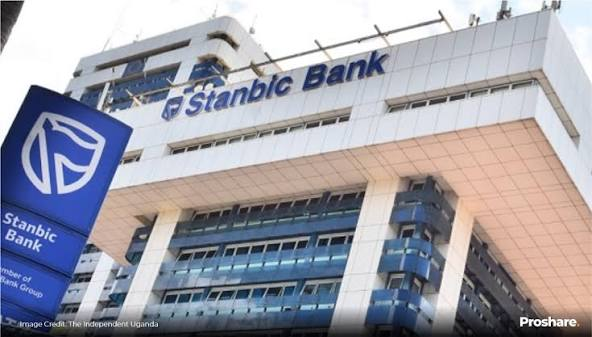
STANBIC IBTC Holdings Plc grew its profit by 32.9 percent to N370.36 billion in the nine months ended September 2026, but the improvement was driven largely by a surge in trading revenue, masking declining interest income, rising operating costs and persistent cash outflows.
The financial results show that the group’s net interest income fell by 14.9 percent to N379.79 billion from N446.47 billion recorded in the corresponding period of 2025, raising questions about the strength of its traditional banking earnings.
Interest income declined by 5.4 percent to N545.35 billion from N576.18 billion, while interest expenses increased by 27.6 percent to N165.57 billion from N129.72 billion.
The widening pressure between interest income and funding costs suggests that the group’s ability to generate earnings from its core lending and deposit-taking activities weakened during the period.
Instead, Stanbic IBTC relied heavily on trading activities to sustain its overall income growth.
Trading revenue surged to N210.13 billion from N23.86 billion in the nine months of 2025, representing an increase of more than 780 percent.
READ ALSO: Stanbic IBTC Holdings’ profit rises 33% to N370.36bn in nine months
The increase helped push non-interest revenue to N437.99 billion from N208.70 billion, accounting for a substantial portion of the group’s total income of N817.77 billion.
Without the sharp increase in trading revenue, the group’s overall earnings performance would have been considerably weaker, given the decline in net interest income.
The pressure also extended to operating expenses, which increased by 14.3 percent to N285.39 billion from N249.69 billion.
Staff costs rose by 25.3 percent to N103.89 billion, while other operating expenses increased to N181.50 billion from N166.79 billion.
Consequently, the increase in operating costs added to the pressure on the group’s underlying profitability, despite the stronger headline earnings.
READ ALSO: Stanbic IBTC grows profit by 69% but faces rising court cases
Another concern emerged from the group’s cash flow position. Stanbic IBTC recorded negative net cash flows from operating activities of N533.22 billion in the nine months, compared with an outflow of N515.96 billion in the corresponding period of 2025.
Its cash and cash equivalents consequently fell to N1.16 trillion at the end of September 2026 from N2.10 trillion at the beginning of the year, representing a decline of approximately N938.88 billion.
The group also recorded negative cash flows from investing activities of N197.71 billion, while financing activities consumed another N240.95 billion.
The combined outflows resulted in a net reduction of N971.88 billion in cash and cash equivalents during the period.
The balance sheet also showed a reduction in total loans and advances to N3.04 trillion at September 2026 from N5.31 trillion at December 2025, although the decline was largely driven by loans to banks, which fell from N1.47 trillion to N428.08 billion.
Customer loans, however, increased by 9.9 percent to N2.61 trillion from N2.38 trillion.
READ ALSO: Stanbic IBTC’s non-performing loans quadruple as management borrows at 14%
Despite the growth in customer lending, the group’s overall balance sheet expansion raises questions about the composition and sustainability of its asset growth.
Total assets increased to N9.60 trillion from N8.62 trillion at the end of 2025, while total liabilities rose to N8.17 trillion from N7.50 trillion.
Although Stanbic IBTC’s profit before tax increased by 35 percent to N531.88 billion, the decline in interest earnings and the scale of cash outflows suggest that its headline profit growth does not tell the full story of its financial performance.
The results highlight the growing importance of trading activities to the group’s earnings at a time when its traditional interest income is weakening and operating costs continue to rise.