


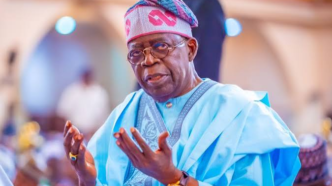
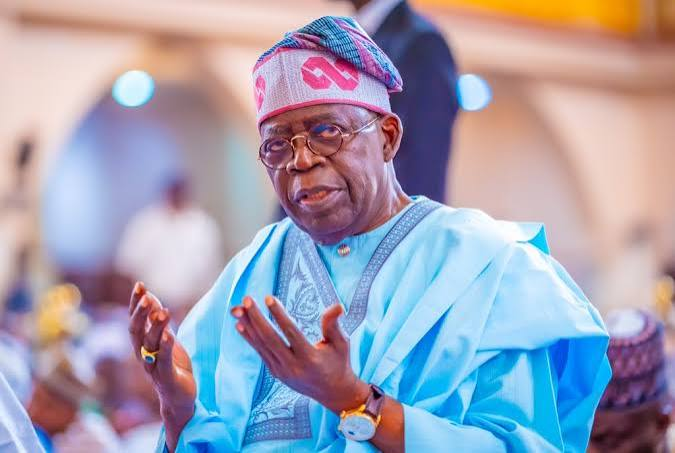
PRESIDENT Bola Tinubu has declared that his administration has completed the emergency phase of its economic reforms and is now shifting its attention to delivering broader prosperity, lower living costs and more productive jobs for Nigerians.
Tinubu made the declaration in his Independence Day address on Thursday, as Nigeria marked its 66th year as an independent nation.
The president said the first three years of his administration were focused primarily on correcting what he described as deep economic distortions that had accumulated over decades.
He acknowledged that the reforms had imposed significant difficulties on Nigerians but argued that the measures were necessary to address structural weaknesses in the economy.
According to Tinubu, the country had reached a point where the focus should move from economic correction to ensuring that Nigerians begin to feel the benefits of improved economic stability.
“Now, our purpose is simple: shared and widespread prosperity,” he said.
ALSO READ: Tinubu: Nigeria is on the right path, give us time to consolidate gains
Tinubu shifts focus to cost of living
The president identified the reduction of living costs as one of the central objectives of the new phase.
Rather than relying solely on measures that cushion the impact of high prices, Tinubu said his government would target the underlying costs of production and transportation.
He said the administration would expand mechanised irrigation and dry-season farming, improve access to seeds and fertiliser, increase agricultural mechanisation and strengthen storage and transportation infrastructure.
Related Articles
The government, he added, would continue investing in roads, railways and ports to improve the movement of goods between farms, factories and markets.
Tinubu said lowering production costs and reducing losses along the supply chain would create room for cheaper goods and improve the purchasing power of households.
Jobs and industrial growth take centre stage
The president also placed employment, enterprise and industrialisation at the heart of his administration’s next phase.
He described Nigeria’s young population as a major economic asset and said government policy must ensure that the country’s growing workforce becomes a source of production and opportunity.
Tinubu said his administration would use Nigeria’s gas resources to power new industries, support the revival of factories and expand digital connectivity to communities that have remained underserved.
He also promised increased investment in skills development and support for businesses seeking infrastructure and financing to expand their operations.
READ ALSO: Tinubu: More Nigerians to get cheaper transport fares from October 1
The president said he wanted to see more Nigerian-made products supplying the domestic market and being exported globally, while encouraging young Nigerians to build technology companies and create employment.
President acknowledges hardship facing households
Despite highlighting improvements in the economy, Tinubu acknowledged that millions of Nigerians remain under severe financial pressure.
He said families across the country still struggle to afford food, school fees, medical bills and transportation.
Related Articles
The president attributed these difficulties to problems that had accumulated over several decades, including low productivity, inadequate infrastructure, limited economic opportunities and weak institutions.
He said his administration could not erase in a few years the consequences of challenges that had built up over generations but could change the direction of the economy.
“We cannot erase in four years what accumulated over generations. But we can change its course,” he said.
Tinubu highlights social intervention programmes
The president said the government’s economic strategy would be accompanied by continued support for vulnerable Nigerians.
He said the administration was strengthening direct assistance to poorer households and improving the National Social Register to make social support more targeted.
Tinubu also cited the Nigerian Education Loan Fund, saying it was helping students from low-income families pursue higher education.
READ ALSO: Tinubu: Nigeria’s economic reforms putting growth on firmer footing
He mentioned CREDICORP as another intervention, saying it was providing working Nigerians with access to consumer credit for assets such as vehicles, solar systems and digital devices.
The president said the Federal Government would continue working with states and local governments to strengthen primary healthcare, basic education and other essential public services.
However, he stressed that social intervention was not intended to replace economic prosperity.
Related Articles
“These programmes are not substitutes for prosperity. They are a bridge to aid our nation’s citizens on their path towards it,” he said.
Tinubu says economic indicators are improving
Tinubu defended the record of his administration’s reforms, saying the country’s economic outlook had improved after three and a half years.
He said Nigeria’s economy had grown by more than 4 percent in 2026, with both the oil and non-oil sectors contributing to the growth.
He also pointed to lower oil theft, a substantial decline in inflation from its peak, rebuilt foreign reserves and greater stability in the foreign exchange market.
According to the president, Nigeria also recorded its highest non-oil export revenue in 2025, exceeding $6 billion.
He said international observers, journalists, non-governmental organisations and multilateral institutions had recognised improvements in Nigeria’s economic stability and resilience.
Tinubu also said foreign direct investment was continuing to rise.
‘We will defeat poverty’
The president said the transition to prosperity would require sustained economic growth and the creation of millions of productive opportunities across the country.
He acknowledged that achieving those goals would take time and discipline but maintained that the country was now better positioned to pursue them because of the economic adjustments undertaken by his administration.
Tinubu said the government was not seeking merely to make poverty-management programmes more efficient but to create conditions that would allow Nigerians to move out of poverty.
Related Articles
“Our objective is not to manage poverty more efficiently. We will defeat it,” he said.
The president described the transition as a new chapter for his administration, saying the period of major economic correction had laid the groundwork for a broader prosperity agenda.
“The age of reform has done its work. Now begins the age of prosperity,” Tinubu said.
He said the ultimate goal was to build a Nigeria where prosperity is broadly shared, economic opportunities are more accessible and children are not limited by the circumstances of their birth.
Tinubu ended the address by urging Nigerians to look forward rather than return to the conditions that preceded the reforms, saying the country should now focus on building on the foundation laid during the reform period