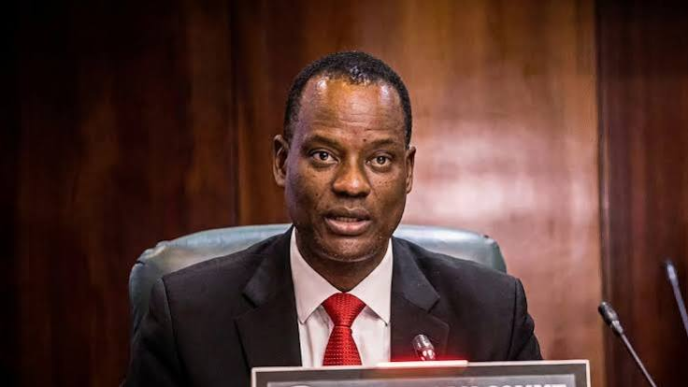




NIGERIA’S net foreign exchange (FX) reserves have climbed to a record $46 billion, while gross reserves have reached $55 billion, strengthening the country’s capacity to meet external obligations and improving investor confidence, according to Governor of the Central Bank of Nigeria (CBN), Olayemi Cardoso.
Cardoso disclosed the figures on Thursday at the Nigeria-Asia Connectivity Dialogue, where he highlighted improvements in Nigeria’s external position and greater stability in the FX market.
The latest net reserves figure represents an increase of $11.2 billion, or 32.2 percent, from the $34.80 billion recorded at the end of December 2025.
Net reserves measure the CBN’s foreign currency assets after accounting for certain short-term foreign FX liabilities. The indicator offers a clearer picture of the external buffers available to support immediate obligations than gross reserves alone.
“The gross foreign reserves are now at an all-time high of $55 billion. Our net reserves is at US$46 billion. In addition to that, the foreign exchange market is stable. These are the things that give investors confidence. You can plan. You can bring in money and take it out,” Cardoso said.
The figures mark a substantial improvement from the position in 2023, when the CBN governor said Nigeria’s net foreign reserves had fallen to about $3 billion. At the height of the country’s FX crisis, he also said net reserves had dropped below $1 billion.
READ ALSO: Nigeria’s reserves hit $54bn as naira strengthens to N1,315/$
The recovery suggests that Nigeria has rebuilt a larger buffer against external payment pressures, although the durability of the improvement will depend partly on foreign currency inflows, demand for dollars and the management of external obligations.
Gross reserves exceed $55bn
Nigeria’s gross foreign reserves have maintained an upward trajectory in 2026, crossing $54 billion in September.
The reserves stood at $54.08 billion as of September 3 and rose to $54.61 billion by September 14, according to previously reported figures. The latest disclosure by Cardoso places them above $55 billion.
Related Articles
READ ALSO: Nigeria’s FX reserves hit $51.03bn, highest level since 2009
The current level also exceeds the CBN’s earlier projection of approximately $51.04 billion for the end of 2026.
Higher reserves can help the central bank manage temporary FX shortages, support confidence in the naira and reassure international investors about the country’s ability to meet external payment commitments.
However, reserve accumulation alone does not guarantee lasting exchange rate stability. The quality and availability of foreign currency inflows, alongside the country’s external payment needs, will remain important.
Naira trades around N1,330/$
The improvement in reserves has coincided with a period of relative stability in the official foreign exchange market.
The naira closed at N1,332.10 per dollar at the Nigerian Foreign Exchange Market on October 7, compared with N1,332.75 per dollar on October 6.
Trading activity also strengthened earlier in the week, with turnover reaching $1.014 billion on October 6, up from $619.22 million the previous day.
READ ALSO: World Bank raises Nigeria’s 2026 growth forecast to 4.3%
On October 7, the naira traded within a range of N1,330.50 to N1,332.99 per dollar, while the weighted average exchange rate stood at N1,331.7679 per dollar.
The relatively narrow trading range contrasts with the sharp fluctuations that followed the foreign exchange market reforms introduced in 2023.
Related Articles
For investors, a more predictable exchange rate can make it easier to estimate the naira value of investments, plan business transactions and assess the cost of repatriating profits. Higher market turnover can also indicate increased activity, although it does not by itself establish that the market has sufficient liquidity in all circumstances.
Economic outlook improves as CBN cuts rates
The reserve gains come amid an improved growth outlook for Nigeria.
The World Bank recently raised Nigeria’s 2026 economic growth forecast for the country to 4.3 percent, from 4.0 percent in 2025. It also projected growth of 4.4 percent in both 2027 and 2028.
Meanwhile, the CBN’s Monetary Policy Committee cut the monetary policy rate by 350 basis points to 23 percent from 26.5 percent at its September meeting.
The committee also adjusted the asymmetric corridor around the benchmark rate to +50 and -300 basis points, describing the change as an operational adjustment intended to improve monetary policy effectiveness rather than a shift in its overall policy stance.
The combination of stronger reserves, a steadier exchange rate and an improved growth forecast could support investor sentiment. Nevertheless, the benefits for businesses and households will depend on whether these gains translate into more predictable access to FX, lower inflationary pressure and stronger economic activity.
Analysts say Cardoso’s disclosure points to a stronger external reserve position than Nigeria had at the end of 2025, providing the country with a larger reported buffer as it seeks to sustain exchange rate stability and attract investment.