

WEST African leaders are seeking to unlock cross-border investment and build regional industries by mobilising private capital for projects in energy, mining, agriculture and digital technology, as the region intensifies efforts to turn economic integration into commercial opportunities.
Sierra Leone’s President, Julius Maada Bio, and Nigerian investor, Tony Elumelu, are leading the initiative ahead of the inaugural West Africa Integration and Investment Summit (WAIIS), scheduled for November 17 and 18 in Lungi, Sierra Leone.
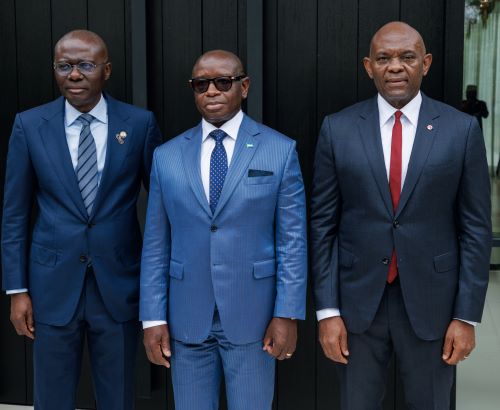
The two leaders brought together major African business executives and financial institutions in Lagos on October 7 for the first physical meeting of the summit’s Private Sector Advisory Board, with discussions centred on identifying viable projects, attracting investors and addressing obstacles to regional economic cooperation.
The initiative comes as West Africa seeks to harness a market of more than 400 million people, its natural resources and growing entrepreneurial base to develop industries that can serve multiple countries rather than operate within individual national markets.
Bio said the region must move beyond discussions about its economic potential and focus on building productive businesses, competitive industries and regional value chains that generate jobs and wealth.
“We are partners in execution — let us transform ideas into partnerships, partnerships into investments, and investments into lasting prosperity for our continent,” he said.
He added that the region’s resources and population would deliver meaningful economic benefits only when converted into productive enterprises and investment opportunities.
READ ALSO: Elumelu: Someone gave me a chance when I wasn’t qualified
Private capital at the centre of regional growth
Chairman of Heirs Holdings, Elumelu, said African businesses must expand beyond their domestic markets and combine capital, expertise and capabilities to build enterprises capable of competing at scale.
He pledged to support efforts to mobilise investment from African and international sources, working with institutions including the Africa Finance Corporation, African Export-Import Bank, United Bank for Africa and Ecobank.
His position reflects the philosophy of Africapitalism, which advocates long-term private-sector investment in strategic sectors as a means of driving economic growth and social development.
“This is consistent with our aspirations to create jobs for our young people,” Elumelu said, adding that West Africa had the resources and capabilities required to achieve greater prosperity.
However, he warned that investment ambitions would require governments to provide predictable policies, efficient regulation and adequate security.
READ ALSO: Elumelu to chair Seplat Energy as Okon emerges CEO
Energy, minerals and agriculture emerge as priorities
The advisory board identified four sectors for focused investment: energy trade and industrialisation, strategic minerals, agribusiness and digital transformation.
These sectors offer opportunities to deepen regional production, improve trade and create employment, provided investment proposals can be converted into commercially viable projects.
Energy trade and industrialisation could support businesses seeking more reliable supplies of power and opportunities to manufacture goods for regional markets. Strategic minerals could attract capital into resource development and processing, while agribusiness offers scope to expand production and build value chains beyond the export of raw commodities.
Digital transformation could also support businesses operating across borders by improving access to services and enabling more efficient commercial transactions.
The initiative will require coordination between governments, financial institutions and private investors to determine which projects can attract funding and what regulatory or infrastructure gaps must be addressed.
READ ALSO: Elumelu’s Heirs Energies acquires 20.07% stake in Seplat in $500m deal
Sanwo-Olu calls for easier movement of goods
Lagos State Governor, Mr Babajide Sanwo-Olu, emphasised the need for industrialisation and the free movement of goods and services across West Africa.
He said political leaders must create the conditions for businesses to invest, manufacture and trade across borders with greater certainty.
Reducing barriers to cross-border commerce could help companies reach larger markets, expand production and develop regional supply chains. However, the benefits would depend on practical implementation, including consistent regulations and more efficient movement of goods between countries.
The summit’s organisers are now seeking to move from broad commitments to direct engagement with potential investors. Bio urged advisory board members to identify suitable projects, match them with prospective financiers and establish the policy interventions needed to advance them.
The inaugural WAIIS will take place at the Julius Maada Bio International Conference Centre in Lungi, Sierra Leone, bringing together heads of state, investors and business leaders.
Its central test will be whether the participating governments and businesses can turn regional integration into funded projects, expanded production and employment opportunities across West Africa.