




The Nigerian government, through the Federal Ministry of Finance, has said the country was on course to becoming a $1 trillion economy by 2030, adding that the strengthening of the naira would boost dollar earnings and purchasing power and thus “lift millions of Nigerians out of poverty.”
In a press statement published online on September 1, 2026, Minister of Finance and Coordinating Minister of the Economy, Taiwo Oyedele, said Nigeria’s latest growth figures proved that they were ‘on track’ to register a $1 trillion economy by 2030. He said that the appreciation of the naira will lead to dollar earnings and purchasing power that will improve the lives of Nigerians as millions of them will be lifted out of poverty.
The claims appeared in separate statements posted on online platforms by President Bola Ahmed Tinubu and the Federal Ministry of Finance, both of which cited Nigeria’s latest economic figures as evidence that the administration’s reforms are working and that the country is on a path to stronger growth and a $1 trillion economy.
Tinubu’s on his social media page, X, entitled “The Renewed Hope Agenda Is Working,” also commented on the figures, citing Nigeria’s 4.43 percent year-on-year GDP growth in the second quarter (Q2) of 2026 against 4.23 percent in the same period of 2025.
The 4.43 per cent figure is accurate, as the National Bureau of Statistics (NBS) reports Nigeria’s economy growing at that rate in Q2 2026, thereby confirming the accuracy of the growth figures.
The Minister of Finance and the Ministry of Finance did not respond to the request for comment sent to both Oyedele’s email and the Ministry’s official email and social media accounts, asking them to provide data to back up the claims of economic and citizens’ life improvement made in the statements.
READ ALSO: Fact-Check: Contrary to Tinubu’s claim, Nigerian economy can’t grow to $1trn by 2026
But when put through a claim-by-claim review, it became clear that while the GDP numbers both the ministry and the president cited were accurate, their conclusions, projections, and interpretations of the figures, namely the poverty reduction and Nigeria’s trajectory to a trillion-dollar economy, were not supported by available data.
Independent commentary by economist Razia Khan disputed the minister’s claim of a trajectory to a trillion-dollar economy. Khan on her X account, quoting the minister’s post, stated that strong growth in Nigeria was real, but reaching $1 trillion by 2030 was “not doable,” pointing to the trajectories of comparable Asian economies.
Economy Post looks at the claims made by the president and minister of finance.
Related Articles
CLAIM 1: Nigeria’s economy grew by 4.43% in Q2 2026
Nigeria’s Q2 2026 report by the NBS indicated that there was a GDP growth of 4.43 percent year-on-year in Q2 2026, up from 3.89 percent in Q1 2026 and 4.23 percent in Q2 2025. Reuters independently confirmed the same 4.43 percent figure based on the NBS release. The ministry also said H1 2026 growth reached 4.16 percent, up from 3.68 percent in H1 2025, These are also consistent with NBS data.
The ministry is correct on the headline figures, but GDP growth on its own is not proof that households are doing better.
Verdict: TRUE
CLAIM 2: Economic growth is becoming ‘more broad-based‘
The ministry highlighted 27 subsectors that saw real growth of over 3 percent in Q2 2026, up from 23 in Q2 2025, suggesting that growth is no longer limited to just a few industries.
The number of subsectors is a real number, but by itself it does not prove ‘broad-basedness’ or an economic conclusion. What matters is the contribution of each sector to overall growth, not how many sectors crossed some threshold, however. The subsector could grow rapidly but contribute little to overall GDP.
The ministry did not release the contribution-weighted statistics. NBS data shows that services still make up 56.62 percent of real GDP, followed by agriculture at 26.15 percent and industry at 17.23 percent. The subsector count does not capture this concentrated structure.
The ministry’s claim is unproven rather than partially true since the precise conclusion (growth is ‘broad-based’) cannot be verified or disproven from the evidence provided.
Verdict: UNPROVEN
Related Articles
CLAIM 3: Manufacturing grew by more than twice its Q2 2025 rate
The ministry said manufacturing output was up 3.24 percent in Q2 2026 year-on-year, compared to 1.60 percent in Q2 2025, about twice as much. But phrasing this as improved industrial output in a broader sense is misleading. The whole industrial sector grew just 3.96 percent in Q2 of 2026, down dramatically from 7.46 percent a year ago. The manufacturing amount is correct, but the larger conclusion is not supported by evidence.
READ ALSO: Fact-Check: Did Nigerian soldiers escort gunmen to Plateau killings?
Verdict: TRUE
CLAIM 4: Agriculture grew by 4.39%
Agricultural output grew by 4.39 percent in Q2 2026 compared to 2.82 percent in the same period the previous year, which is accurate. The ministry’s additional description of this as ‘stronger production and value-chain performance,’ however, cannot be supported by a GDP figure alone. Separate data on production volumes, farm incomes, food prices, and distribution efficiency are needed, none of which are provided.
Verdict: TRUE
CLAIM 5: Services were the largest driver of growth
At 56.62 per cent of real GDP, services remain Nigeria’s largest sector, rising by 4.60 per cent in Q2 2026 compared to 3.94 per cent in Q2 2025. Both of the underlying numbers are accurate. But rather than just referring to sector size or growth rate, the largest driver of growth refers to a specific contribution to the growth rate. Since the government has not published a breakdown of contributions, this specific framing cannot be independently verified.
Verdict: UNPROVEN
Related Articles
CLAIM 6: The naira’s appreciation expanded the economy by about 17 per cent in US-dollar terms
The naira gained more than 12% between H1 2025 and H1 2026, which resulted in an approximate 17% increase in the economy in dollar terms, the ministry said. The basic idea is this: an increase in the strength of the naira immediately raises the value of GDP in naira terms in dollars. The government has not disclosed the series of nominal GDP inputs used to derive the 17% figure, nor the exchange-rate series it used (average versus end-period). We have three different measures of real GDP growth: nominal naira growth and dollar-converted GDP. The reported nominal GDP for Q2 2026 (₦119.29 trillion versus ₦100.73 trillion in Q2 2025, or an 18.43% nominal increase) does not support the 17% dollar-term figure. Without the methodology, this cannot be verified.
Verdict: UNPROVEN
CLAIM 7: The stronger economy will meaningfully strengthen dollar incomes
Here the government statement shifts from a GDP measure to a statement about household income, a totally different measure. GDP measures aggregate output but not wages nor employment nor the distribution of income among families. There is no data on pay, employment or household income, so the claim cannot be established. This is not evidence of it being true. This is an unproven projection.
Verdict: UNPROVEN
CLAIM 8: The economic gains will improve purchasing power
Purchasing power is determined by income compared to prices, not by GDP growth alone. The IMF’s 2026 Article IV assessment warned that increased food and fertiliser costs might exacerbate poverty and food insecurity, projecting that Nigeria’s consumer prices will rise by 16 percent in 2026, compared to 4.1 percent real GDP growth – a discrepancy that could both erode and boost buying power. Because no household-level income or consumption data are provided, and past IMF estimates point to a troubling rather than reassuring trend, this claim is unproven and raises concerns.
Verdict: UNPROVEN
CLAIM 9: The reforms and economic growth will lift millions of Nigerians out of poverty
Related Articles
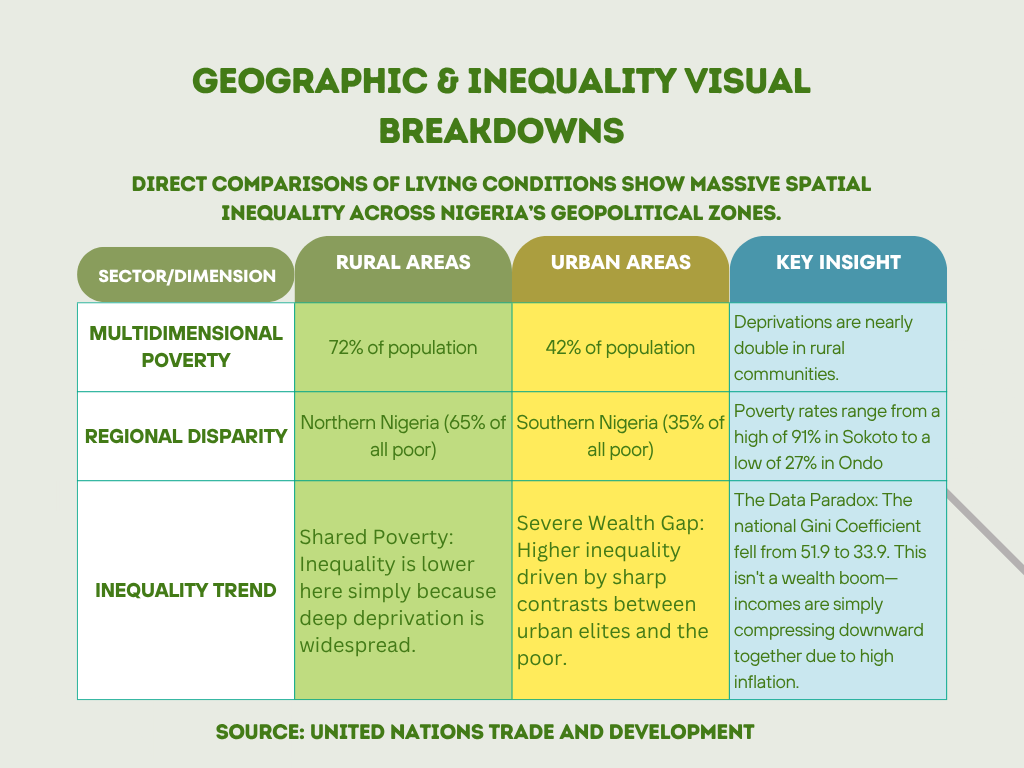
The ministry has not provided any poverty data to support this. Independent research says otherwise. World Bank projections have it that more than 60 percent of Nigerians will be living below the national poverty level in 2025, rising to almost 62 percent in 2026, more than 141 million people. That doesn’t mean poverty has been eliminated on a large scale, but rather that deep poverty persists even as GDP grows.
Verdict: UNPROVEN
CLAIM 10: Nigeria is ‘on track’ towards a $1trn economy by 2030
The $1 trillion number is a government goal, not an independent forecast. The IMF, in its June 2026 predictions, said, “Real GDP growth is projected at 4.1 per cent in 2026 and 4.3 per cent in 2027, while nominal GDP will hit ₦529 trillion in 2026 and N618 trillion in 2027.” These numbers alone do not take us to $1 trillion, as the target is in dollars and depends on inflation, nominal growth, exchange-rate movements, and real output. The ministry has not published year-by-year assumptions to connect to the 2030 target and therefore cannot be verified as ‘on track.’ Economist Razia Khan on X responded to the ministry claim, saying while Nigeria’s development is robust, $1 trillion by 2030 is “not doable,” pointing to similar trajectories in Asia and other regions.
Verdict: UNPROVEN
Claim 11: Nigeria is among the top 10 contributors to global real GDP growth
The statistic is accurate, as IMF figures put Nigeria among the top 10 contributors to global growth, accounting for about 1.5 percent of the total. The problem is in the way it is framed. The contribution reflects economic size as much as growth rate, yet the release is worded in a way that can be easily. and no doubt deliberately, be read as “one of the world’s fastest-growth economies.” That is a different claim, and it is unsupported. Misleading, not ‘true with context,’ is a true number used to create a false impression.
Verdict: MISLEADING
Claim 12: Nigeria could become Africa’s largest economy by 2028
This is portrayed by the ministry as something that “would accelerate” if stability and investor confidence persisted. It is an explicitly conditional prediction, not a claim based on Q2 GDP data. To verify this, one would have to compare predicted nominal GDPs of Egypt and South Africa up to 2028, taking into account currency effects, which the publication does not consider. This goal, and the $1 trillion goal, are not data-driven but dressed up in momentum.
Related Articles
What the data actually show
NBS data and independent reporting confirm Nigeria’s Q2 GDP growth of 4.43 percent is correct. Several sectors grew at a faster pace than a year ago, and oil production rose to 1.72 million barrels per day in Q2 from 1.55 million in Q1
The ministry is using macro statistics that are very reliable, such as GDP-to-income, GDP-to-purchasing-power and GDP-to-poverty-reduction, which produces welfare conclusions that the data does not support. There’s a missing piece of evidence for each link in the chain (wealth, purchasing power, and poverty). But the independent sources tell a different story. World Bank data shows that despite the rise in growth, the poverty is still widespread, and the IMF warns of the inflationary dangers to households.
GDP measures the quantity and growth of output but does not quantify how the output is distributed.
Verdict: UNPROVEN
Overall Verdict: MISLEADING
The Ministry’s GDP estimates are accurate and verifiable (claims 1, 3 and 4). Its sectoral framing of claims (2, 5, 11) stretches statistics to draw conclusions (breadth, predominance, global standing) that the data do not support. All of its welfare and trajectory claims (6, 7, 8, 9, 10, 12) are unfounded, and the poverty claim (9) is directly contradicted by independent evidence.
In summary, the release is right on output but wrong on what it means for Nigerians. The real test of recovery is not whether GDP is growing, which it certainly is, but whether real incomes, household consumption, employment and living standards are rising with it. And in that respect the release asserts, rather than demonstrates, such increases.
PART TWO: President Tinubu’s “Renewed Hope Agenda Is Working” Statement
President Tinubu’s statement is based on the same GDP data but made other claims. Most macro indicators are substantially right, including trade surplus, reserves, and credit ratings, with one rating overstatement. As with the ministry, the weakest part is the transition from macroeconomic improvements to household welfare, still unproven.
Related Articles
CLAIM 13: Growth recorded across agriculture, manufacturing, oil and gas, and services, makes the largest contribution to our GDP
Agriculture grew by 4.39 percent, manufacturing by 3.24 percent and services by 4.60 percent. Oil production increased from 1.55 million barrels per day in Q1 2026 to 1.72 million barrels per day in Q2 2026. But the phrase “now make the largest contribution” implies a new development. In fact, services have always been Nigeria’s largest industry, contributing 56.62 percent of GDP in Q2 2026, a status not achieved this quarter. The growth numbers are correct. But the claim of a new structural change is unsubstantiated by evidence.
Verdict: PARTLY TRUE
Claim 14: Nominal GDP reached N119.27trn, up 18.43% from N100.7 trillion in Q2 2025
This number corresponds to the nominal GDP recorded in the NBS Q2 2026 report. Note that this is a naira-denominated nominal metric, not the ministry’s unsupported claim of a 17 percent expansion in dollar terms (Claim 6).
Verdict: TRUE
Claim 15: Nigeria today has trade surpluses
Several independent reports showed that Nigeria’s external reserves stood at over $52 billion in July and August 2026 and stood at about $53.11 billion as of August 24, 2026. According to the Central Bank of Nigeria (CBN), this is the highest level since January 2009, so the 17-year period is correct. Moody‘s also confirmed the claim, citing the reserve build-up in its August 2026 assessment.
Verdict: TRUE
CLAIM 16: Nigeria’s credit rating has moved up several notches
Related Articles
Nigeria’s sovereign credit rating has improved, but ‘several notches’ is an overstatement. That record is now held by Fitch’s April 2025 decision to raise Nigeria one notch to B. S&P upgraded from B to B in May 2026. Moody’s reaffirmed its B3 rating in August 2026 but subsumed its outlook from stable to positive, not upgraded it. Overall, there are only two one-notch upgrades and one outlook change, hardly a ‘several notches’ gain on any scale. All three agencies continue to rate Nigeria a speculative grade, well below investment grade. The direction of travel is positive and true, but the magnitude represented is not.
Verdict: PARTLY TRUE
Claim 17: Investors who left are returning
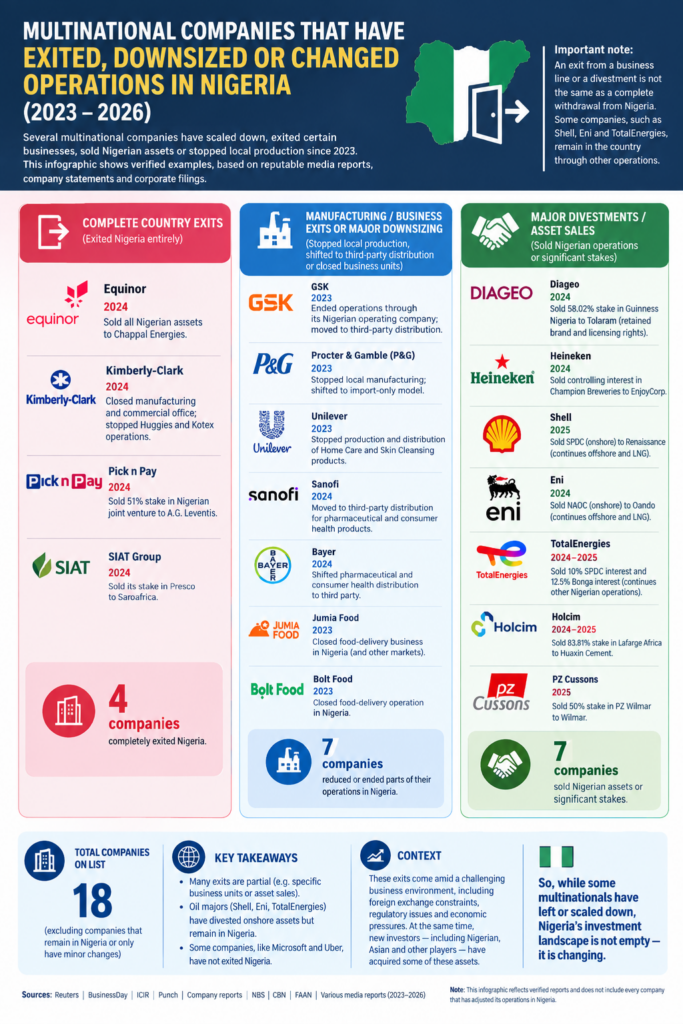
Improved sovereign ratings, rising reserves and a narrowing parallel-market exchange rate spread are consistent with stronger investor sentiment, and analysts have observed renewed portfolio inflows in this context. However, the statement does not provide any empirical evidence to substantiate the claim, such as Foreign Direct Investment (FDI), capital flows or named returning investors. It is directionally possible based on surrounding indicators, but not independently verified.
Verdict: UNPROVEN
Claim 18: The economy is on an irreversible path towards even stronger growth, and reforms will translate to the dining table and in their pocket
Verdict: UNPROVEN
CLAIM 19: Nigeria’s foreign reserves are at their highest in 17 years
According to the CBN, Nigeria’s external reserves had risen above $52 billion through July and August 2026, reaching approximately $53.11 billion as of August 24, 2026, the highest level since January 2009, reports show. In its own report on the country’s debt profile in 2026, Moody’s also highlighted the increase in Nigeria’s foreign reserves and independently verified the number.
Verdict: TRUE
Related Articles
CLAIM 20: The economy is on an irreversible path towards even stronger growth and reforms will translate to the dining table and in their pocket
This is the same GDP-to-household-welfare leap already discussed in Claims 7-9 of the ministry’s release. Aggregate indicators, GDP, reserves, trade balance, and credit ratings are improving, but none directly measure household income, consumption, or poverty. The most relevant evidence at the household level is the World Bank’s estimate that over 60 percent of Nigerians will live below the national poverty line in 2025, up to about 62% in 2026. That points to widespread poverty continuing, not to gains at the “dining table”.
That the president is framing more relief ‘in the next few weeks’ is itself a concession that such improvements have not yet happened.
Verdict: UNPROVEN
Conclusion: Most of President Tinubu’s key macroeconomic claims are backed by independent trade, reserves, and credit ratings data, unlike the release issued by the Ministry of Finance. The only exaggeration is the claim that Nigeria’s credit rating was upgraded by ‘several notches,’ when the actual upgrades only came in two one-notch increments and one outlook revision. Still, the statement takes a leap of faith from documented macroeconomic improvements to the unsubstantiated conclusion that ordinary Nigerians are already seeing results. Poverty and living standard data available to us do not support this conclusion.
Overall verdict: PARTLY TRUE