

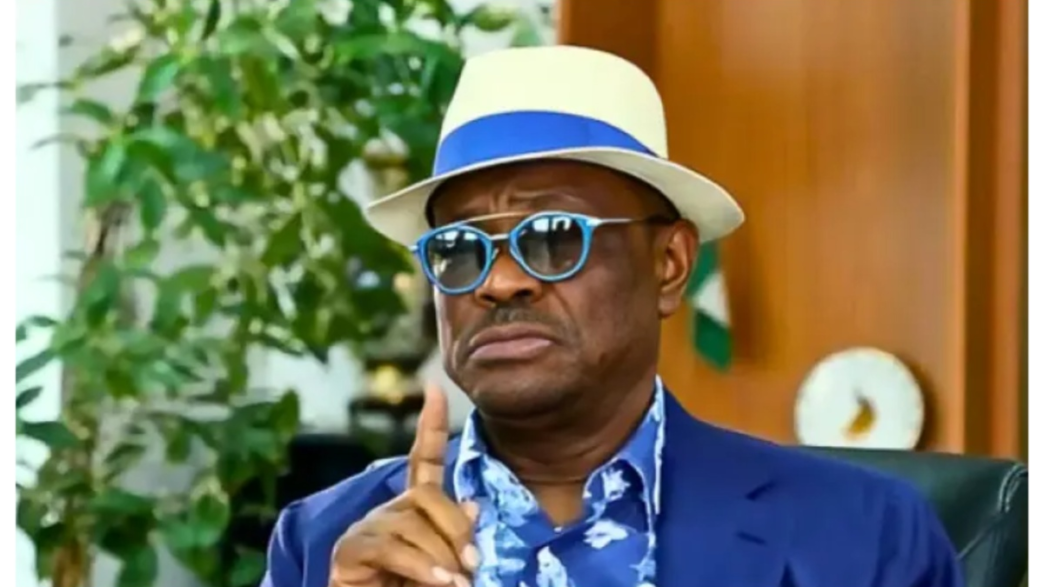
Nyesom Wike’s tenure as minister of the Federal Capital Territory has left a visible trail of roads, bridges and construction sites across Abuja, but beneath the infrastructure push is a political story that has become increasingly difficult to separate from his work in the nation’s capital.
Since taking over the FCT in August 2023, Wike has made physical development the centrepiece of his administration, moving aggressively to revive abandoned projects, open up satellite communities and tackle some of Abuja’s long-standing infrastructure gaps.
The results are visible across several parts of the territory.
The Jahi-Gwarimpa interchange has been completed, while major road projects around Apo, Karshi, Kuje, Gwagwalada, Bwari and Kubwa have either been completed, revived or pushed towards completion.
The administration has also continued work on the long-delayed Apo-Karshi Road, a project that dates back more than a decade, alongside road networks connecting satellite communities to Abuja’s central districts.
He has done major works on the Southern Parkway connecting the Christian Centre to Ring Road 1, the Outer Southern Expressway (OSEX) from Villa Roundabout to Ring Road 1, and the B6 and B12 Circle Road arteries.
He has also facilitated the reconstruction and connector projects on the Tungan Madaki–Zuba Road, Karu Road, and Nile University–RR3 and Collector Road CO1 extensions linking the Institution and Research District to Lugbe.
READ ALSO: 2027: I won’t sit in Abuja and let Atiku win, Wike says
Wike has repeatedly pointed to inherited projects as evidence that his administration is recovering value from contracts that had remained stalled for years.
He said in 2026 that about 70 percent of the projects completed by the FCT Administration under President Bola Tinubu were inherited contracts, many of which had been abandoned for between 15 and 16 years.
Related Articles
The infrastructure drive has extended beyond roads. Water infrastructure, drainage, schools, healthcare facilities and other public projects have also featured in the administration’s development programme, particularly in satellite towns.
For a rapidly expanding capital, the focus on satellite communities is significant.
As Abuja’s population spreads outward, the pressure on roads, housing, water, drainage and other services has intensified. The push into areas such as Kuje, Gwagwalada, Bwari and Karshi is therefore aimed not only at building roads but at creating alternative centres of growth around the capital. He recently completed the reconstruction of the Arab Road-Kubwa Road.
READ ALSO: Wike says Fubara’s bid to build political structure early was biggest mistake
But the political shadow over Wike’s tenure has grown alongside the construction boom.
The former Rivers State governor remains a member of the Peoples Democratic Party (PDP) while serving as a minister under an All Progressives Congress (APC)-led Federal Government. Though the party in which he is the leader has a presidential candidate, he has publicly said he is backing President Bola Tinubu of the APC.
His decision to work with President Bola Tinubu after the 2023 election has made him a central figure in the internal crisis that has continued to shake the PDP.
Wike has not retreated from the political arena.
Instead, he has continued to speak openly on the 2027 election, defend his relationship with Tinubu and mobilise political support for the president, while insisting that the PDP remains free to contest other positions.
That dual role has generated fierce criticism from sections of the opposition, where his supporters and opponents have battled over his influence and the direction of the party.
Related Articles
READ ALSO: ‘Call God to come down, reallocation of Jabi Lake irreversible,’ Wike replies pastor
The result is an unusual contradiction: a minister overseeing one of the country’s most ambitious infrastructure programmes while simultaneously remaining deeply entangled in the politics of an opposition party.
Wike’s critics have questioned whether his political engagements distract from his responsibilities in Abuja. The minister has rejected that argument and maintained that his political activities have not stopped work in the FCT.
Apart his support for Tinubu, he has fiercely lampooned his predecessor in Rivers State and former principal, Chibuike Amaechi.
He launched criticisms against his former principal after Amaechi said, “Tinubu’s policies killed my mother, and I could not afford her drugs.”
In his response, Wike said: “This one, a speaker for eight years, from 1999 to 2007. This one, a governor for eight years, from 2007 to 2015. This one, a minister for eight years, from 2015 to 2023.
“And your mother was sick, and you are telling the whole world that because of the policy of Tinubu, you couldn’t buy drugs for your mother, and so your mother died,” Wike said.
READ ALSO: Wike revokes 485 Abuja land titles over failed authentication
The FCT minister also questioned Amaechi’s claim in view of his family’s reported financial circumstances, including his reference to Amaechi’s wife as an industrialist.
“Yet, an industrialist couldn’t give you money to buy drug for your mother,” he said.
Wike questioned why Amaechi’s associates, whom he said had private jets and attended the burial, could not have assisted with his mother’s medical expenses while she was alive.
He has told senator representing the FCT, Ireti Kingibe, that she will not return in 2027 – a comment criticised by many Nigerians.
His supporters, meanwhile, have used the growing list of completed projects to defend his record.
“I had said it more than one year ago, Senator Ireti, you won’t come back as a senator. That’s why you people don’t like people who tell you the truth. It’s bitter. Let her show one project,” he said in March 2026., which he repeated last month.
Political analyst, Ogala Adiosu, said the FCT minister could be humbed in the 2027 election if he loses Abuja, urging him to exercise restraint.
“Wike is not God. He cannot determine what happens in Nigeria. People have tried it at various times but got disappointed at the end of the day. That confidence is obviously overbloated,” he said, while urging citizens to stamo their authority in the 2027 elections.
Wike is also criticised for preventing Rivers State Governor, Sim Fubara, from returning for his second term. The Ijaw people, where Fubara comes from, are seething in bitterness over his role in truncating their chances, and say they will take their own pound of flesh at the right time.
Besides infrastructure and politics, experts say Abuja’s problems extend beyond what can be captured at project commissioning ceremonies.
Traffic congestion remains a challenge in several corridors. Rapid development continues to put pressure on drainage, waste management, water supply and public transportation. Satellite communities still have significant infrastructure gaps, while completed roads will require sustained maintenance to deliver long-term value.
There are also questions about the cost of the infrastructure programme, the pace of project completion and the quality and durability of the work.
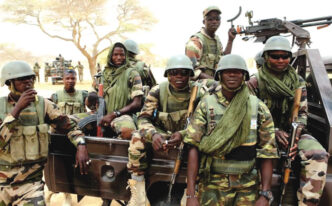
Insecurity remains a significant problem in several parts of Abuja, with kidnapping cases rising by the day.
These issues are becoming more important as the political temperature rises ahead of 2027.
For Wike, the roads and bridges provide a tangible record that can be pointed to. His political battles provide an equally visible record of a minister who has refused to disappear into the background of national politics.
That is the paradox of his FCT tenure: Abuja is being rebuilt in concrete, asphalt and steel, while the political battles surrounding its chief administrator remain as combustible as ever.
The infrastructure may ultimately define what Wike leaves behind in Abuja. However, the political controversies surrounding him are likely to determine how that record is remembered.